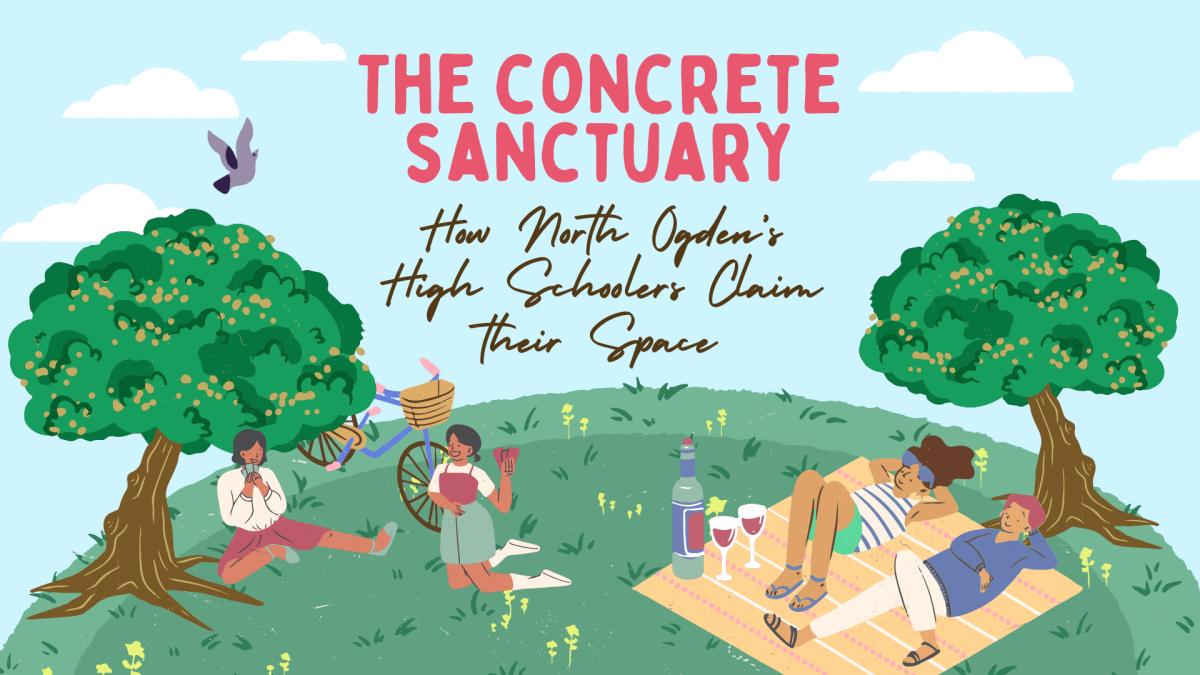
For high schoolers, the world often feels designed for everyone but them. Yet, in the quiet corners and expansive green spaces (large multi-use areas in North Ogden that go beyond typical small neighborhood playgrounds) of North Ogden, students are quietly reclaiming the landscape. In an era of rigid schedules, the “third place” (social ground that isn’t home or a classroom) is where the real education in identity happens. Students don’t just use these spaces; they transform them through routine, digital presence, and communal activity. Some of the student hangouts are when the budget is zero, and the North Ogden parks become the Ultimate choice, even for high schoolers.
To begin with, the first hangout idea that students make their own is the North Ogden Park. The Skatepark isn’t just for tricks; it’s a social grandstand. Students make it theirs by establishing “territory” (specific benches or ramps where certain friend groups always meet). The presence of basketball and sand volleyball courts allow for spontaneous, high energy gatherings that require no entry fee, just a ball and a group chat. While North Ogden park serves as a high-energy lounge, it also serves as a low-energy sanctuary. Away from the noise of the game, friend groups “claim” specific benches, quite grassy patches, or a swingset to simply decompress. For high schoolers, these spots become essential safe zones where the intensity of the day fades, allowing them to talk through what’s really on their minds. In the stillness between activities, a trusted circle of friends can navigate the pressure of school and life, turning a public park into a private confessional.
Secondly, another park for student hangouts is the Mountain View Park. At Mountain View Park, personalization involves the landscape itself. High schoolers often gather on the park’s “huge hill” specifically to watch the sunset, turning a natural feature into a communal living room. In the winter, these same slopes become high-energy social hubs for sledding, where groups establish “bases” at the top of the hill, and they transform these spaces into their own through routine, digital presence, and communal trust.
Lastly, another park for student hangouts is the “Homing” grounds; Barker and Oaklawn parks. At Barker Park, students take advantage of the amphitheater and well-lit boweries to host their own informational gatherings. Whether it’s a group meeting for a hammock session in the trees or using the amphitheater’s open area for spontaneous music, they use the park’s flexible features to create a temporary home. Similarly, Oaklawn Park offers a different vibe; its scenic and allows trails and wooded picnic areas for in a way a quiet spot for students needing a breather away from adult supervision, and a safe space for talking about life, and even uncovering old memories and creating more connection with the friend(s) your talking too.
In conclusion, student hangouts whether that be money wise or on a budget of zero, create a Permanent Trace. What makes these hangouts truly “theirs” is the memories they build. Students leave digital and physical signatures on these spaces by layering their own memories and digital traces over the city’s (not just North Ogden) parks. North Ogden’s youth prove that a space doesn’t need to be owned to feel like home, and that these areas are simply where the students find the freedom to simply find comfort in high-energy and low-energy activities. In the end, these parks are more than just acreage on a city map. They are the silent witness to the most formative years of a student’s life. Long after the high schoolers of North Ogden have graduated and moved on, the ‘spots’ they claimed will remain that are imprinted with the echoes of old jokes, late night heart-to-hearts, and the shared growth that only happens when you have a space to call your own. They are not visiting these parks; they are leaving a piece of their history behind.